
It would be easy to announce an India-wide battery collection network. It would also be a claim we couldn't stand behind. Collection is won or lost on route density, and density is a local property: it exists in a corridor, not on a map of a country.
So we're starting with one, western Uttar Pradesh and the National Capital Region, and building it properly before adding the next. This piece explains the economics behind that choice, why this corridor, and how we'll decide where to go next.
Why does route density decide battery collection?
A pickup is a vehicle, a crew and a few hours. Whether it pays depends on how many batteries sit within reach of a route, how often the same sources produce material, and how far it is back to the yard.
Spread thin, every pickup is expensive and every consignment is slow to fill. Concentrated, routes fill, the yard turns over, and consignments reach the size a recycler wants to receive. In collection, the network that's dense wins against the network that's wide.
What makes a battery pickup worth doing?
Three things, mostly. Enough batteries at each stop that the visit is worth the trip. Stops close enough together that one route covers several. And sellers who come back: a dealer or yard that produces used batteries every week is worth more than a one-off source.
That's why the sources we buy from are the places EV battery packs come out in volume: EV dealers, service centres, charging yards and fleet operators. Relationships with them are built in person and on calls, and they hold because the terms are clear: rates quoted upfront, free pickup, same-day payment and a GST invoice.
Why western Uttar Pradesh and the NCR?
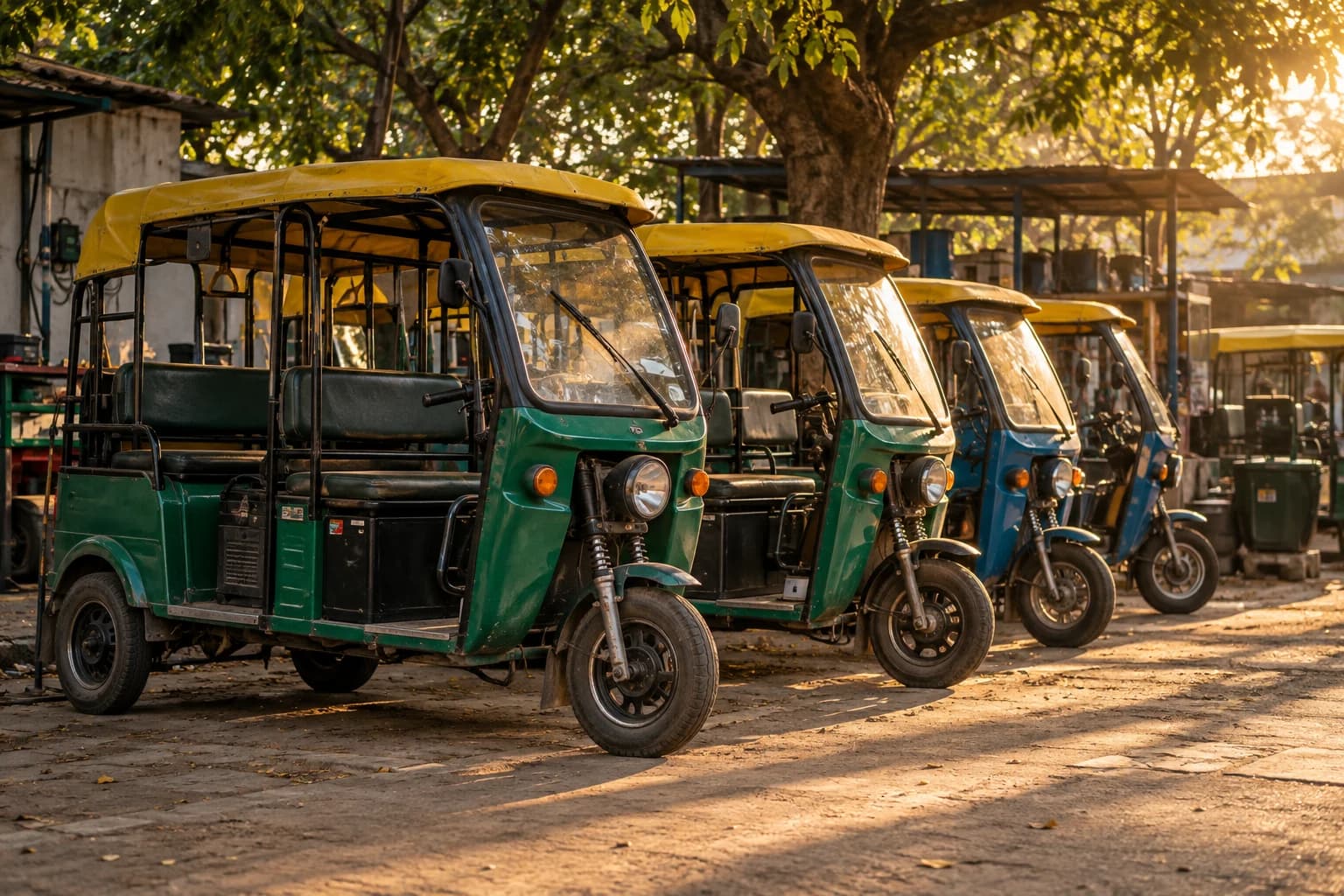
Western Uttar Pradesh and the National Capital Region carry one of India's densest end-of-life battery streams. Electric vehicles are part of daily life across the corridor, from e-rickshaws and e-carts to e-scooters and delivery fleets, and every one of them runs on a battery pack that will reach the end of its life. Nationally, 25,50,865 electric vehicles were sold in FY 2025-26 alone, 4,77,765 of them e-rickshaws, according to EVreporter's analysis of Vahan data.
Our corridor runs through Meerut, Ghaziabad, Hapur, Gautam Buddha Nagar, Bulandshahr, Baghpat and Muzaffarnagar. It's also the geography our team knows, which matters when relationships are built in person.
What does doing one corridor properly mean?
It means the things that are easy to skip at scale. Every pack stickered and weighed, with a photo of the scale reading. Sorting by chemistry and condition, with a quarantine that holds. Lots sealed against a safety checklist. A dispatch manifest that lists every sticker, and a gate weight reconciled against the weight in. The full process is on How it works.
It also means routing material to CPCB-registered recyclers and nowhere else, which is what the Battery Waste Management Rules require of collectors, as we explain in the rules, explained.
How will the network grow?
Expansion follows the same three signals as the first corridor: material availability, route density and recycler demand. When a corridor has all three, it's worth doing; when it doesn't, it isn't, however good it looks on a map.
Until then, we'd rather commit to a number we can hit than a number that sounds good. If you're a recycler looking for feedstock from this corridor, talk to us about supply.
Frequently asked questions
- Which districts does Optimite Energy cover?
- Our starting corridor runs through Meerut, Ghaziabad, Hapur, Gautam Buddha Nagar, Bulandshahr, Baghpat and Muzaffarnagar in western Uttar Pradesh, and the National Capital Region.
- Who does Optimite Energy buy batteries from?
- EV dealers, service centres, charging yards and fleet operators, with rates quoted upfront, free pickup, same-day payment and a GST invoice.
- Which battery chemistries do you collect?
- Lithium-ion only: LFP and NMC packs from electric vehicles, each chemistry in its own lot. We don't collect lead-acid.
- Where do the batteries go?
- To CPCB-registered recyclers only, with pack-level records from pickup to the recycler's gate.
We’d rather commit to a number we can hit than a number that sounds good.
Start a conversation