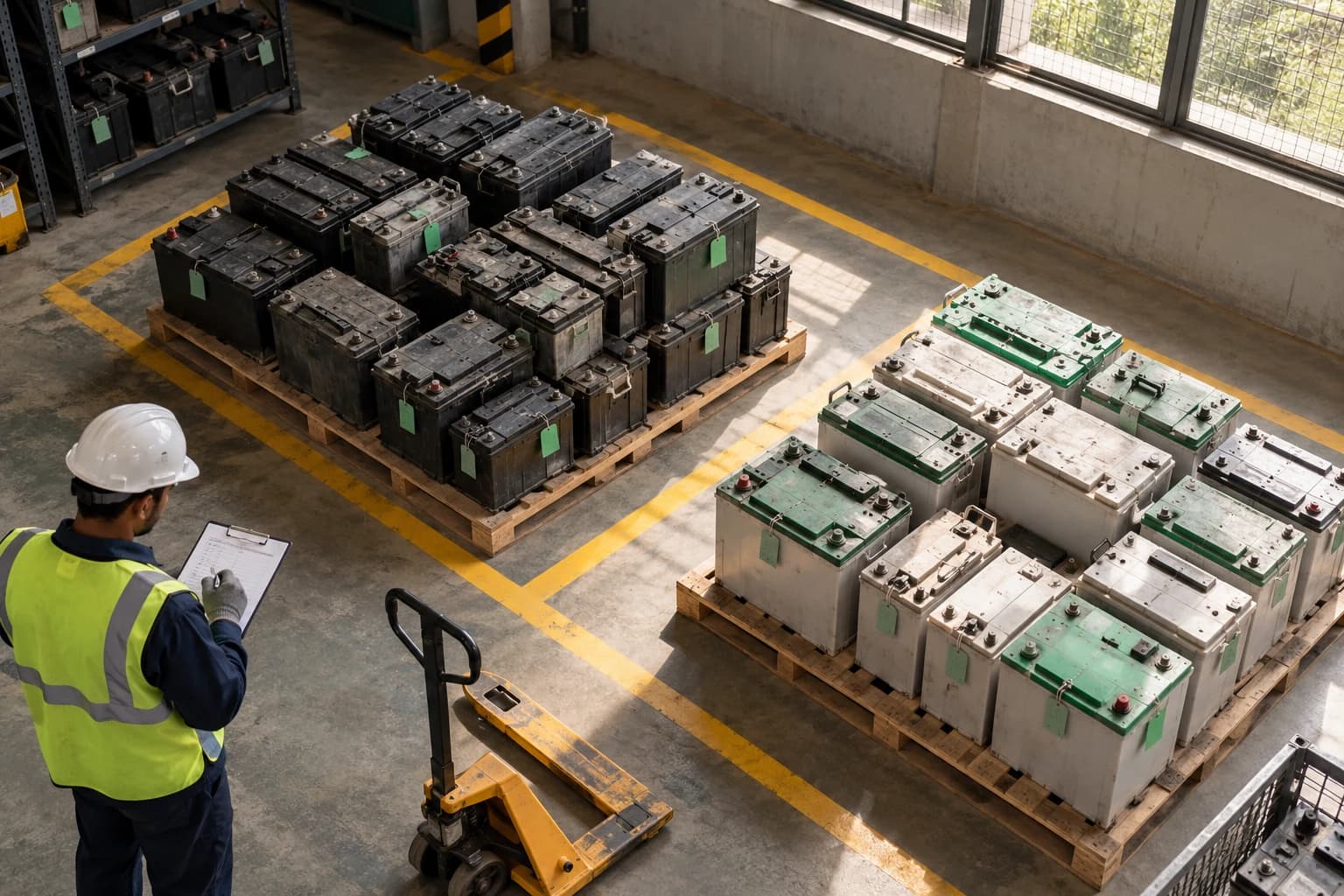
Five checkpoints, one record. Every battery is stickered and weighed at pickup, sorted and sealed at the yard, and reconciled at the recycler's weighbridge.
Pack-level recordsA sticker and weight for every battery
LFP & NMCSingle-chemistry lots only
Quarantine that holdsDamaged packs never enter a lot
Registered downstreamCPCB-registered recyclers only
Why it matters
The gap is upstream.
01/04·Source
It starts on the street.
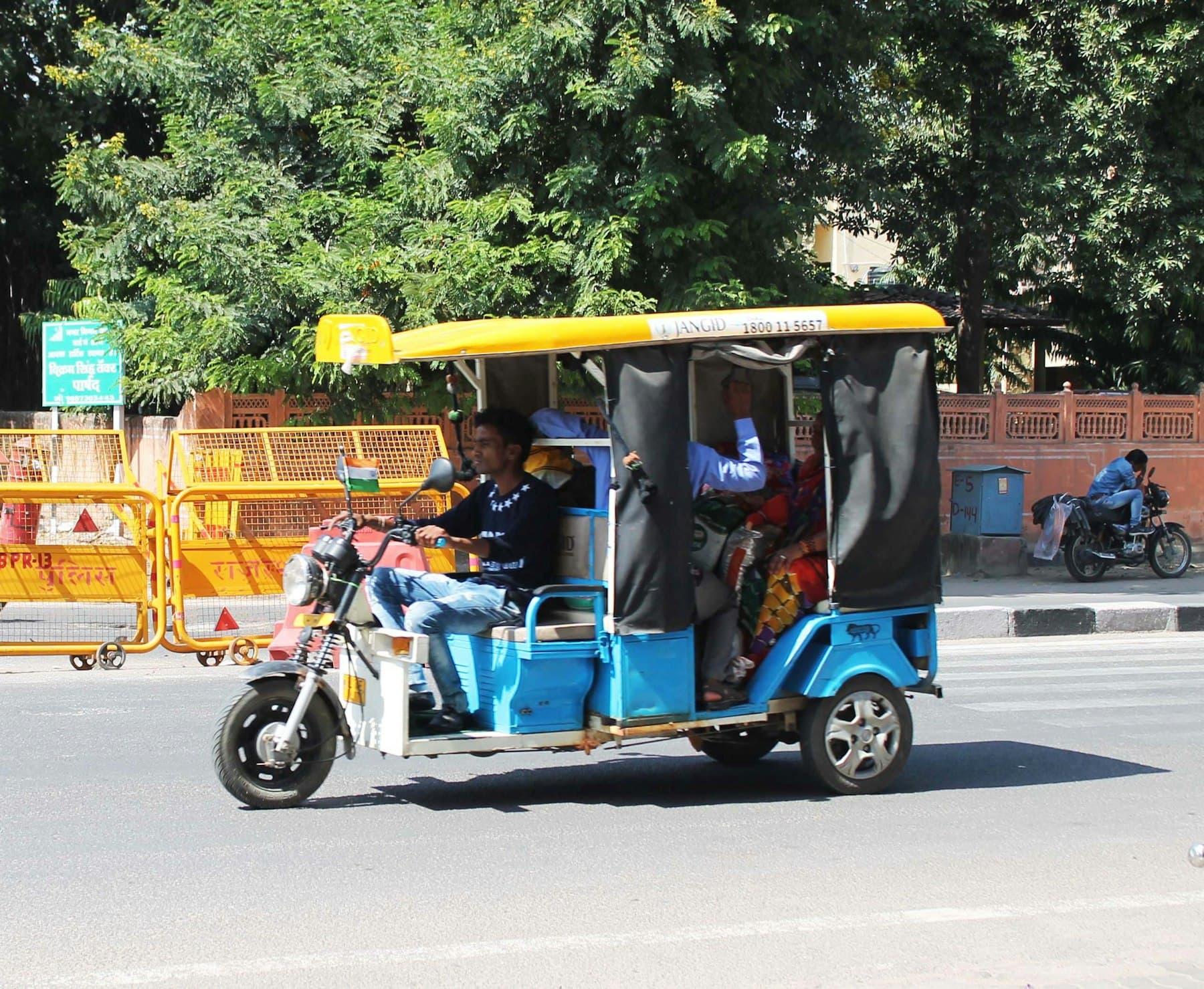
Western UP and the NCR run on electric vehicles: e-rickshaws, e-scooters and e-loaders, each one wearing through its battery pack. It makes this corridor one of India's densest end-of-life battery streams.
25,50,865
electric vehicles sold in India in FY 2025-26 alone.
Sources are fragmented and routes are thin. A used battery goes to whoever turns up first with cash, and from there, there is no documentation trail.
The informal buyer
Cash on the spot
No weight on record
No trail after the sale
A formal buyer
✓Rates quoted upfront
✓Same-day payment
✓GST invoice
✓A record of every battery
03/04·Breaking
It's broken open informally.
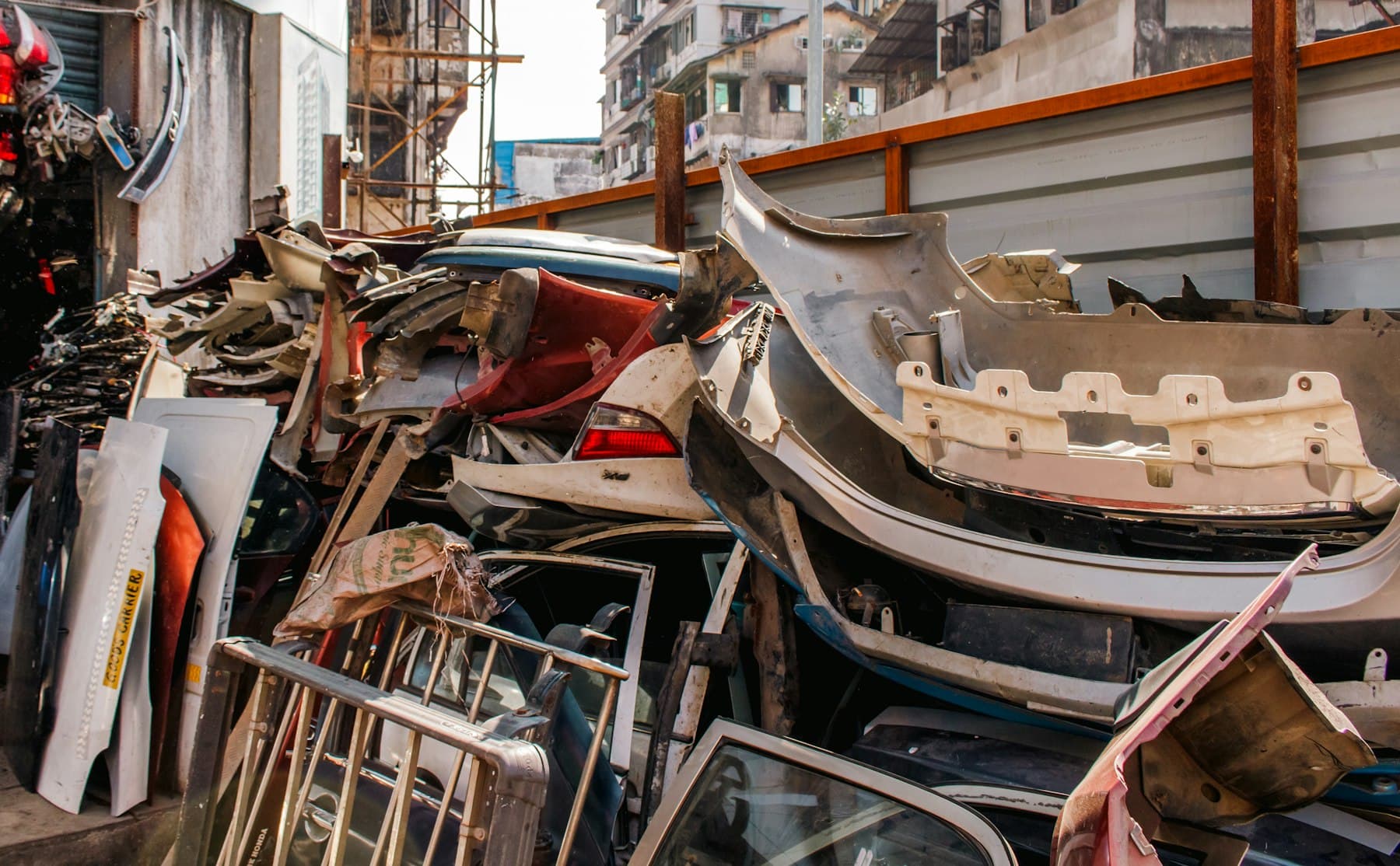
The large majority of end-of-life batteries move through informal channels, dismantled without safety controls, with no traceability and significant material loss.
“shall not be sent for landfilling or incineration”
What the Battery Waste Management Rules, 2022 require of waste batteries collected under producer responsibility (Rule 4(3)).
India's formal recycling capacity runs well below what it could process. This is not a technology problem: every serious recycler can process more than it receives. The constraint is collection.
“hand over Waste Battery to registered refurbisher or recycler”
What the Battery Waste Management Rules, 2022 require of every entity involved in collection (Rule 7).
We buy from dealers, charging yards, fleet operators and service centres across one corridor.
02Thin route density
One dense corridor first, so every route fills before we add the next.
03Cash on the spot
Rates quoted upfront, free pickup, same-day payment and a GST invoice.
04No documentation trail
Every battery stickered and weighed, and recorded all the way to the recycler's gate.
The five checkpoints
Five checkpoints. One record.
The record is created at the first handover and travels with the battery to the last. Here is what happens at each checkpoint, and what it leaves behind.
Photographs are illustrative. Records are samples in our real formats.
Optimite EnergyPack
OE-000412
LFP · 51.2 V · OK
Weight27.4 kg
Scale photoAttached ✓
PickupPK-20260811-02
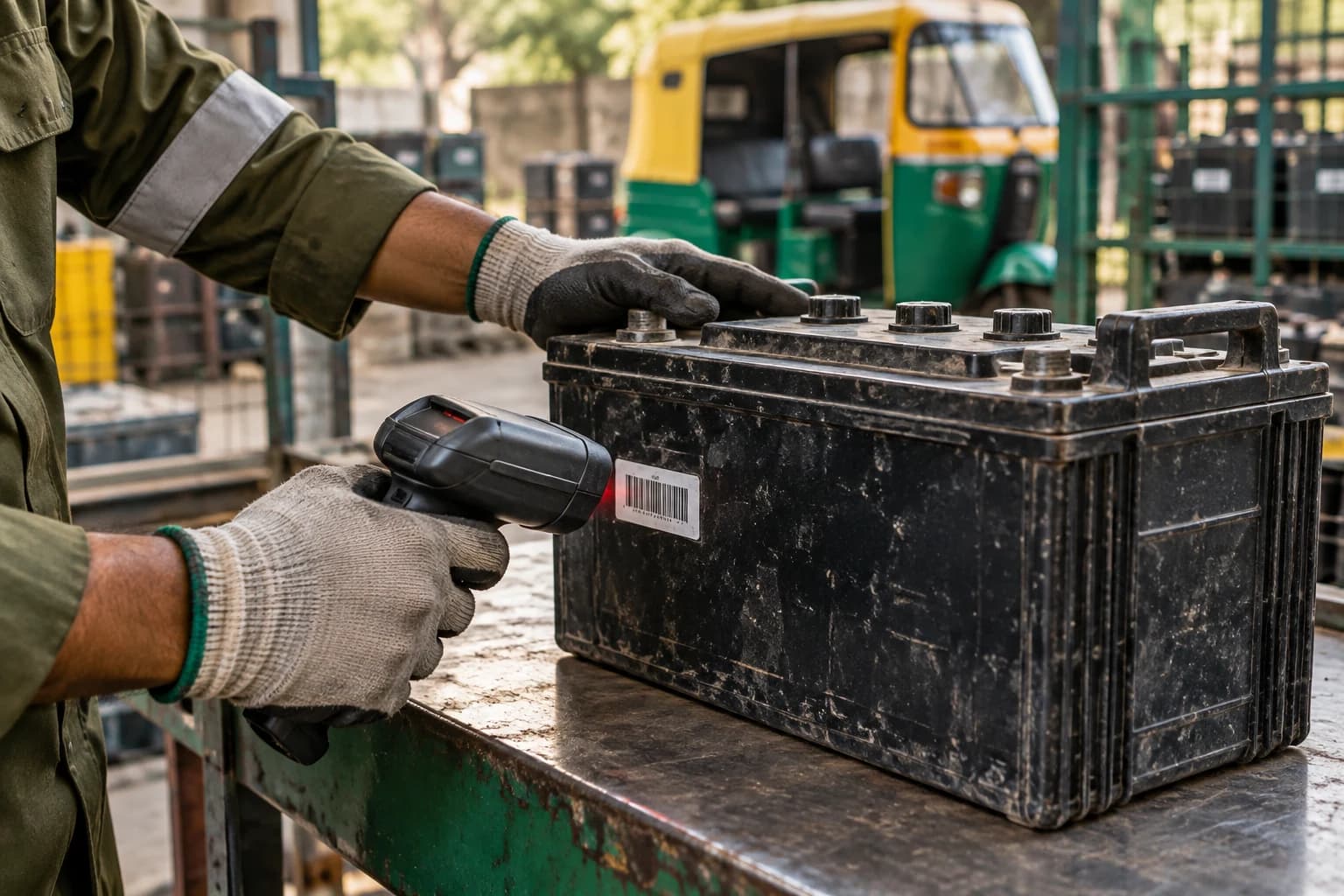
01Collect
At the seller's door
Every battery gets its own sticker and is weighed individually, with a photo of the scale reading attached to its record. The seller signs the pickup manifest, and payment follows the recorded weight, with a GST invoice.
Recorded
Sticker ID
Weight
Scale photo
Pickup reference
Seller signature
LFP · OKSorted
→ Lot LFP-2026-08-13
NMC · SwollenHold
→ Quarantine bay
Blocked from lots
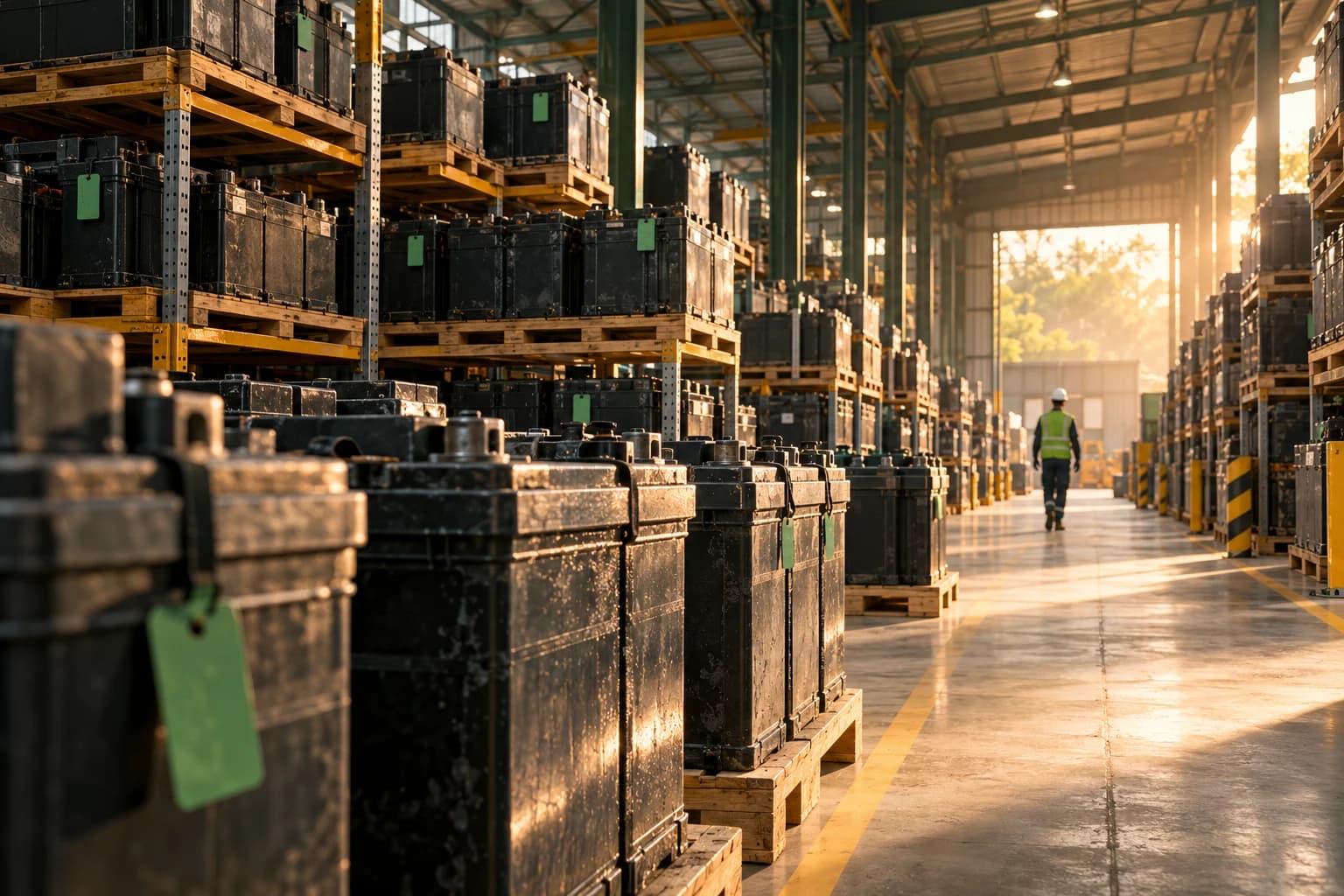
02Yard in
Scanned, sorted, quarantined
At the consolidation yard every sticker is scanned in. Packs are sorted by chemistry and condition. Swollen or damaged packs go to a separate quarantine bay, stay on the record, and can never be added to a lot.
Recorded
Scan-in
Chemistry
Condition
Quarantine status
Seal checklist
LFP-2026-08-13
✓Terminals taped or capped
✓No leaking packs
✓Single chemistry
✓Palletised, strapped, max 3 high
✓PPE worn
Sealed14 AUG · 05:50
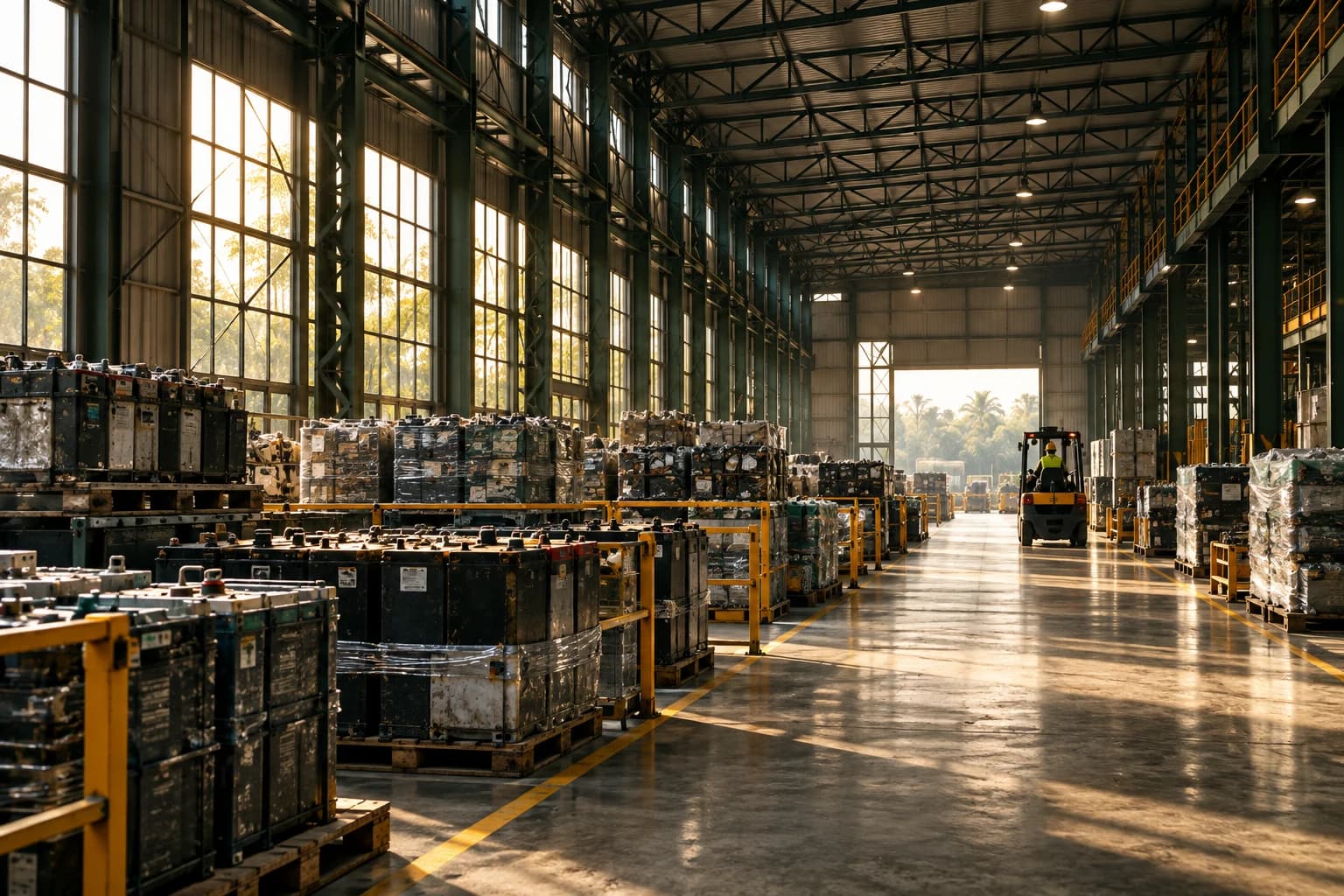
03Seal
A lot, sealed against a checklist
Lots are single-chemistry, opened with a code that carries the chemistry and the date. A lot is sealed only when its safety checklist is complete: terminals taped or capped, no leaking packs, palletised and strapped no more than three high, PPE worn.
Recorded
Lot code
Sticker list
Safety checklist
Seal time
Dispatch manifest
LFP-2026-08-13
Sticker
Pickup
kg
OE-000412
PK-20260811-02
27.4
OE-000413
PK-20260811-02
11.8
OE-000414
PK-20260812-01
26.9
⋮ 309 more
Stickers312
E-way bill3412 5578 ••••
04Dispatch
Every sticker on the manifest
The dispatch manifest lists every sticker in the consignment, the pickup each one came from and its recorded weight. It travels with the consignment and its e-way bill.
Recorded
Dispatch manifest
E-way bill
Vehicle
Weighbridge · gate in
14 AUG · 13:58
Weight in6,214.0 kg
Weight at gate6,208.5 kg
Variance−5.5 kg
−0.09%
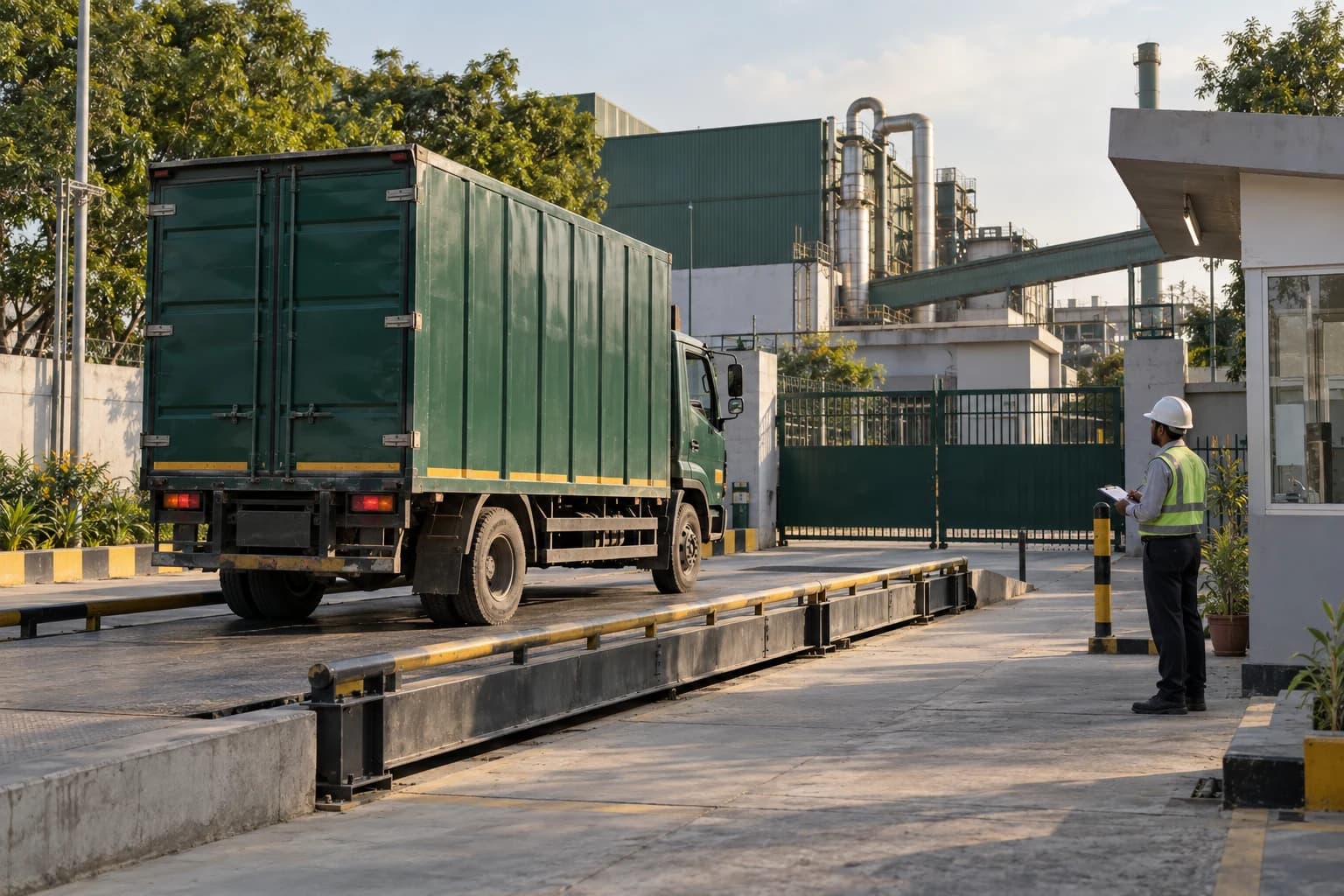
05Gate in
Reconciled at the recycler's gate
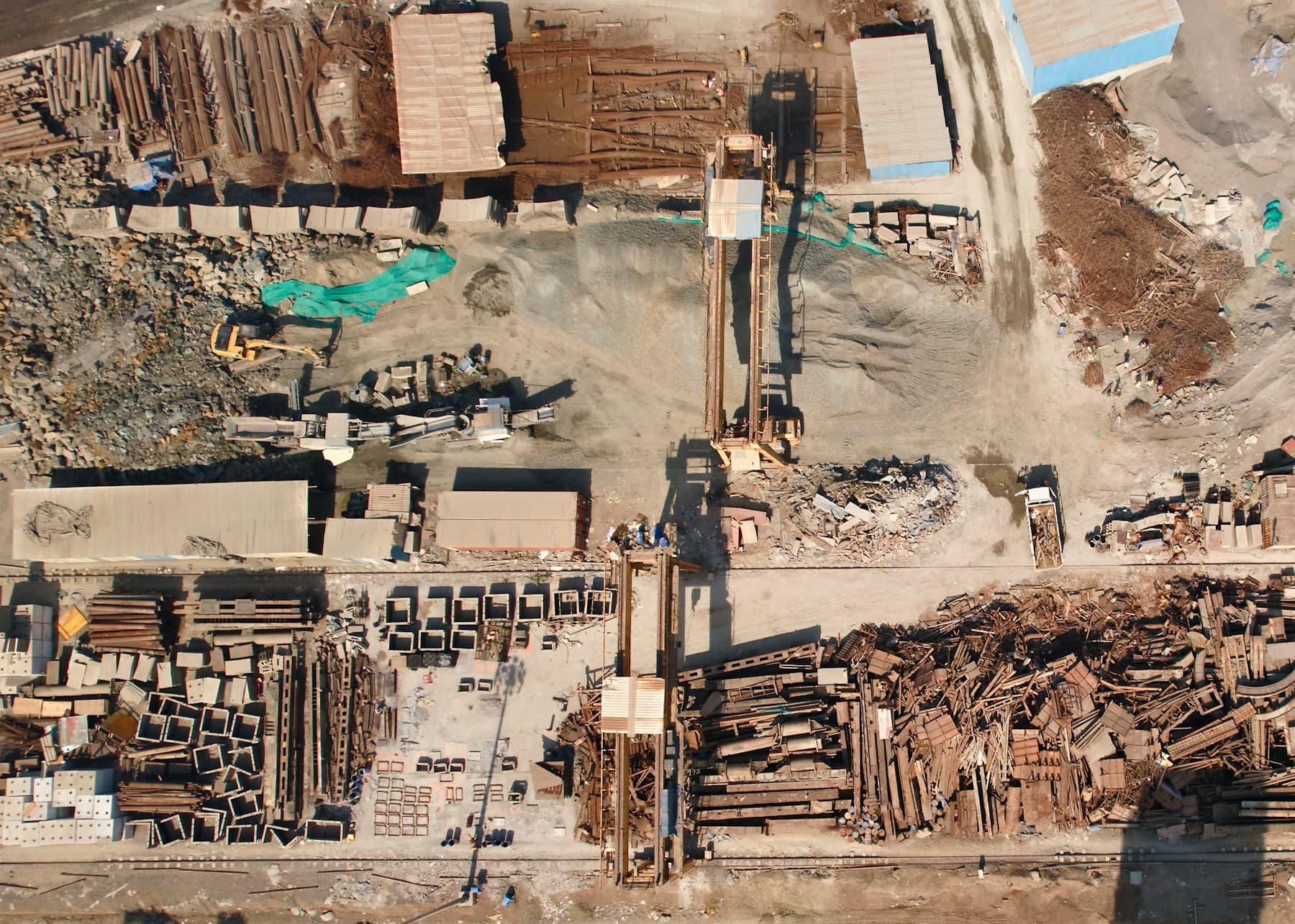
At the recycler, the consignment crosses the buyer's weighbridge. The weight at the gate is recorded against the weight in, and the variance is written down rather than rounded away.
Recorded
Gate weight
Weight in
Variance
Consignment record
Pack-level records, source to gate.
Every lot ends in one consignment record, built from the stickers, weights and checkpoints that came before it. Recyclers get material sorted before it reaches the gate, with documentation that supports their reporting under the Battery Waste Management Rules.
✓Lot reference and chemistry
✓Every sticker in the lot
✓Weight in, weight at gate, variance
✓Custody events, pickup to gate
Consignment recordIllustrative
Lot reference
LFP-2026-08-13
Chemistry
LFP · EV traction packs
Units
312
Pickups
4 · PK-20260811-02 +3
Vehicle
UP 15 ET 41••
Stickers
OE-000412 – OE-000723
Weight in
6,214.0 kg
Weight at gate
6,208.5 kg
Variance
−5.5 kg · −0.09%
Source
Hapur & Ghaziabad, UP
Destination
CPCB-registered recycler, Haryana
Custody
11 AUG · 09:42Collected: stickered, weighed
12 AUG · 17:05Yard in: scanned at node
14 AUG · 05:50Sealed: safety checklist
14 AUG · 06:20Dispatched: EWB 3412 5578 ••••
14 AUG · 13:58Gate in: buyer weighbridge
Sample record shown to illustrate the documentation we generate. Not live production data.
Standards
How we operate.
The rules we hold ourselves to at every checkpoint, whoever is watching.
Segregated storage
Sorted by chemistry and condition. Swollen or damaged packs are held in a separate quarantine bay and never enter a lot.
Compliant transport
Handled as hazardous goods, because they are.
Registered downstream only
Material moves to CPCB-registered recyclers, nowhere else.
Pack-level custody
Every battery stickered and weighed individually, every consignment listing every sticker, from pickup to gate, so documentation is generated from real transactions rather than assembled afterwards.
Supply partners
Work with the record.
Recyclers get material sorted before it reaches the gate, with documentation that supports EPR reporting.